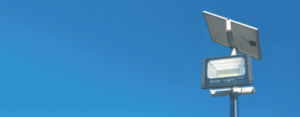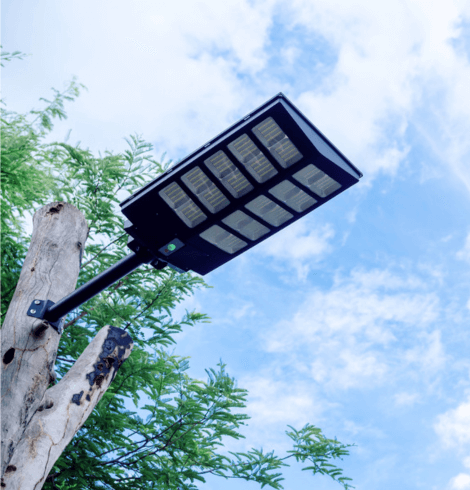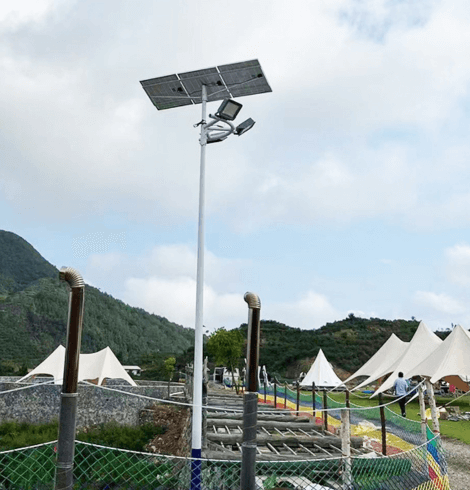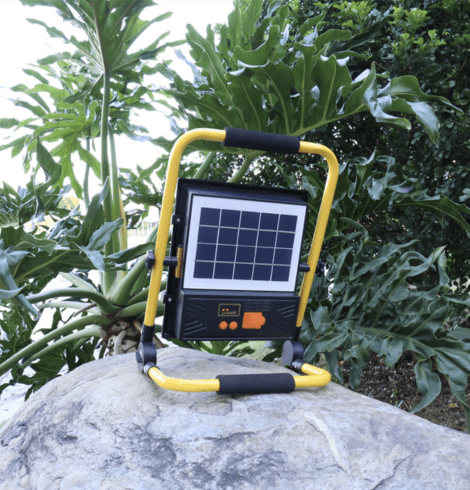
A solar flood light is an all-in-one outdoor lighting system powered entirely by sunlight, built to deliver high-lumen brightness without any wiring, grid connection, or electricity cost.
Introduction
If you’re planning a project, managing a facility, or sourcing lighting solutions for infrastructure, solar flood lights are likely on your radar. And they should be. These units operate entirely off sunlight—absorbing energy during the day and delivering bright, wide-area lighting at night. They don’t require wiring, don’t add to your power bill, and keep working even during outages.
But going solar isn’t just about sustainability. It’s about control, cost savings, and independence. Whether you’re lighting a warehouse perimeter or a parking lot, these lights can give you real advantages. So, let’s explore what they are, how they work, and what makes them a smart choice for commercial applications.
What Is Solar Flood Light?
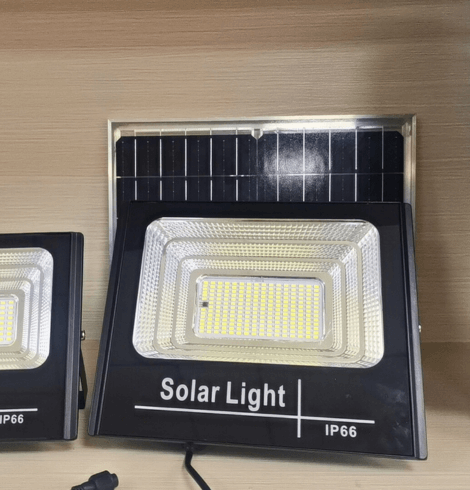
A solar flood light is a complete lighting solution packed into a single unit. It includes a solar panel, a rechargeable battery, and an LED light fixture—all designed to run independently of the grid.
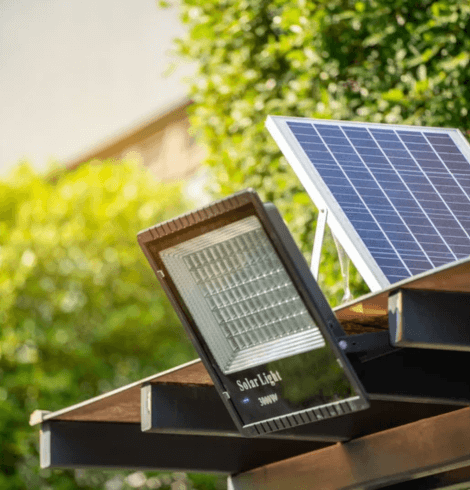
The light produces a wide beam, powerful enough to cover large areas like loading zones, signs, paths, and industrial yards. Because each light has its own power source and control system, it’s entirely self-contained and can be installed just about anywhere the sun shines.
What makes this truly valuable to businesses is the freedom it offers—no trenching, no permits, no dependence on electrical infrastructure. You mount it where you need it, and it just works.
Now that you know what a solar flood light is, let’s break down the key components that make the whole system run smoothly.
What’s Inside the System?
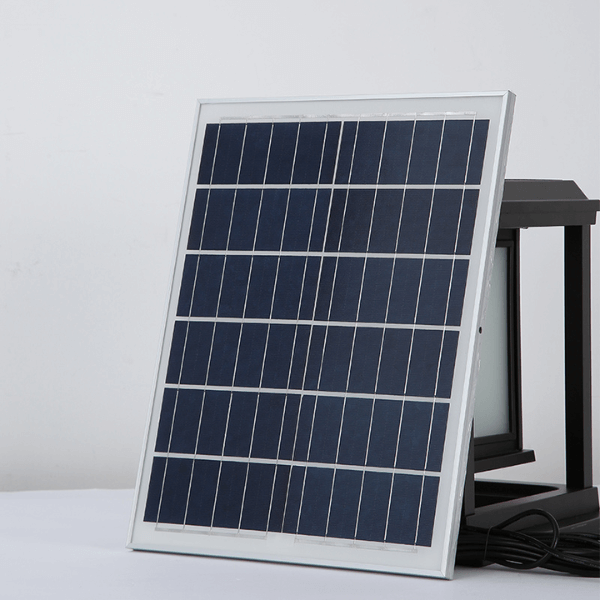
The Solar Panel: Your Energy Collector
Every system starts with the solar panel. It’s typically mounted on top of the light or nearby and is responsible for capturing sunlight and converting it into electricity.
Most commercial lights use monocrystalline or polycrystalline silicon panels. These materials are efficient and can generate usable energy even on overcast days. This ensures that your lighting system doesn’t just work in ideal conditions—but keeps working all year round.
Rechargeable Battery: Where the Power Lives
The power gathered by the panel gets stored in a built-in battery, usually lithium-ion or lithium iron phosphate (LiFePO₄). This is what keeps your light on after the sun goes down.
The better the battery, the longer your light will last through the night—typically between 8 and 12 hours. High-end batteries even provide backup power for multiple nights in a row, which is critical in areas with frequent cloudy weather.
LED Fixture: Brightness with Efficiency
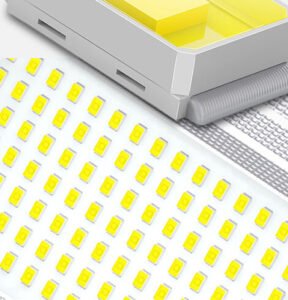
The LED chips are the light source, and they’re remarkably efficient. They use a fraction of the energy traditional bulbs need, yet produce powerful brightness, often between 3,000 to 10,000 lumens. That means fewer units are needed to light large areas. Plus, LEDs last for years—often up to 50,000 hours—so you won’t need to replace them anytime soon.
EMS Controller: The Smart Brain Inside
The energy management system (EMS) is the controller inside every solar light. It decides how and when the battery charges and discharges. It also controls things like motion sensing, dimming, and dusk-to-dawn operation. Without it, your system wouldn’t know when to switch on or how to conserve power. A good EMS ensures that your system runs efficiently, safely, and automatically.
Durable Housing and Sensors
Since these lights are designed for the outdoors, the enclosure matters. Most units come with IP65 or higher waterproof ratings and are built to resist corrosion and heat. Many include motion sensors, which activate the light only when movement is detected—ideal for security applications or reducing unnecessary energy usage during quiet hours.
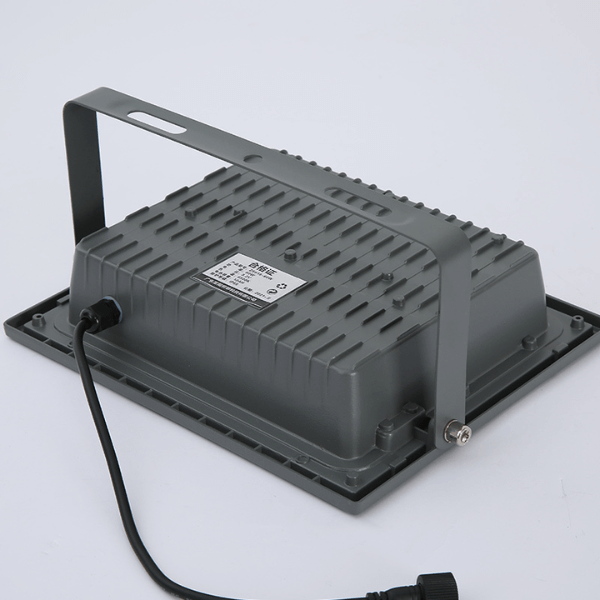
So with the right combination of solar panel, battery, LED fixture, controller, and housing, you’ve got a rugged, standalone lighting solution. But why are so many B2B buyers choosing these over traditional systems? Let’s look at the business case.
Why More Buyers Are Going Solar?
Lower Install Costs
One of the biggest advantages is cost-saving during installation. With no wiring or trenching required, you can install dozens of lights quickly using only basic tools. This is particularly valuable for remote or temporary sites, where pulling power lines would be complex and expensive.
Zero Electricity Bills
These lights are powered entirely by sunlight. That means no utility bills. For large facilities or public infrastructure projects, the annual savings can be substantial—especially when multiplied across dozens or hundreds of units.
Always On, Even In Outages
Unlike traditional systems that fail when the grid goes down, solar flood lights stay on. This is critical for high-security areas, emergency response zones, or facilities that require lighting 24/7.
Some setups even allow for hybrid options that connect to the grid, but most B2B users opt for fully autonomous units.
Maintenance? Minimal
These systems are designed to run with almost no intervention. Once installed, the only routine maintenance required is an occasional cleaning of the solar panel to keep efficiency high. Batteries typically last 5 to 7 years, and LEDs last even longer. This low-maintenance design makes them ideal for hard-to-reach locations or large installations that would be costly to service frequently.
ESG-Ready Lighting
If you’re working with government tenders, public infrastructure, or ESG-sensitive clients, solar flood lighting helps you tick the right boxes. It’s a clean-energy solution that doesn’t sacrifice performance—and supports your environmental commitments.
Clearly, solar flood lights offer more than convenience—they align with financial goals and sustainability mandates. But where exactly do they create the most impact? Let’s explore real-world applications.
Where Solar Flood Lights Work Best?
Parking Lots
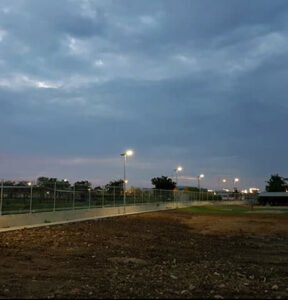
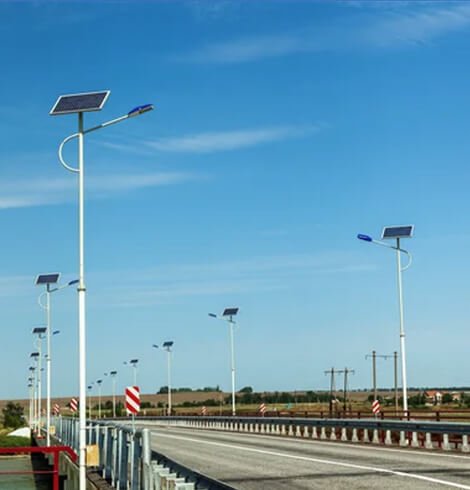
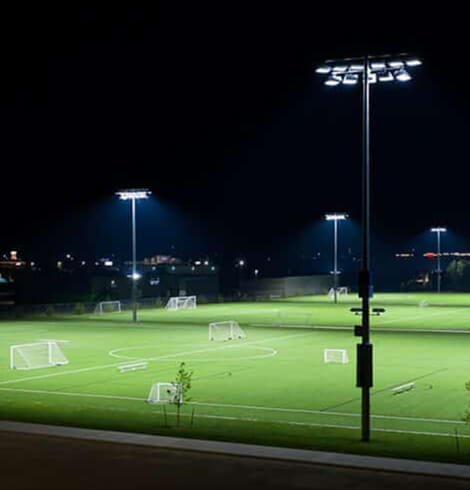
Parking lots are often huge, and laying underground power cables can cost thousands. Solar flood lights are a faster, cheaper way to achieve full coverage. Units can be installed on poles, walls, or even fences—wherever you need light.
Warehouse Fences
Security lighting for large sites usually requires robust infrastructure. But solar flood lights simplify this. Their motion-sensing features mean you get lighting only when it’s needed, which saves energy and improves visibility when it matters most.
Parks And Greenways
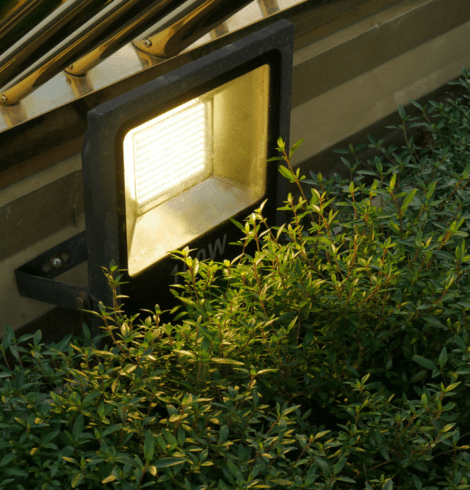
Municipal projects often involve lighting green spaces and walking paths. These areas rarely have existing electrical access, and trenching could disturb natural environments. Solar lighting installs easily without damaging landscaping—and improves public safety at night.
Signs In Remote Areas
Signage lighting doesn’t need to be complicated. Whether it’s a roadside billboard or a sign at the edge of a warehouse complex, solar lights allow for professional-level illumination without running power from a nearby building.
Temporary Sites
Need lighting for a few months on a site or for a weekend event? Solar flood lights are portable and easy to relocate. You save time, avoid the hassle of generator rentals, and won’t need to file permits for temporary wiring.
From public spaces to construction sites, solar flood lights are proving their worth. And thanks to built-in smart features, they’re getting even more efficient and adaptive.
Smart Features That Save You Time
Auto On/Off At Sunset
Dusk-to-dawn automation is standard in many models. These systems use ambient light sensors to turn on automatically at sunset and turn off at sunrise. You won’t need manual switches, timers, or extra programming.
Motion-Sensing Brightness
Passive infrared (PIR) motion sensors detect movement and brighten the light only when activity is nearby. This is useful in quiet zones or during off-hours, where you don’t want lights burning at full power all night.
Custom Lighting Schedules
Some units let you set lighting schedules—like full brightness from 6–10 PM, reduced brightness overnight, and motion-based activation after midnight. These schedules are often programmable directly or through remotes.
Remote Control
Most commercial models come with hand-held remotes that let you change brightness levels, test lights, or switch between modes. This simplifies maintenance, especially for high-mounted units.
App Integration for Larger Projects
In high-volume installations, you may want centralized control. Some premium lights support app-based management, allowing you to check battery status, adjust schedules, and group lights by zones—perfect for industrial parks, campuses, or municipalities.
As these features show, solar flood lights aren’t just energy-efficient—they’re smart. But how does all this translate into long-term value for your business? That brings us to the real numbers.
What Will Solar Flood Lights Really Cost You?
Before you make a buying decision, the first thing most procurement teams ask is: “What’s the actual cost over time?” That means we need to go beyond just the unit price and look at what it takes to install, operate, and maintain a lighting system over several years.
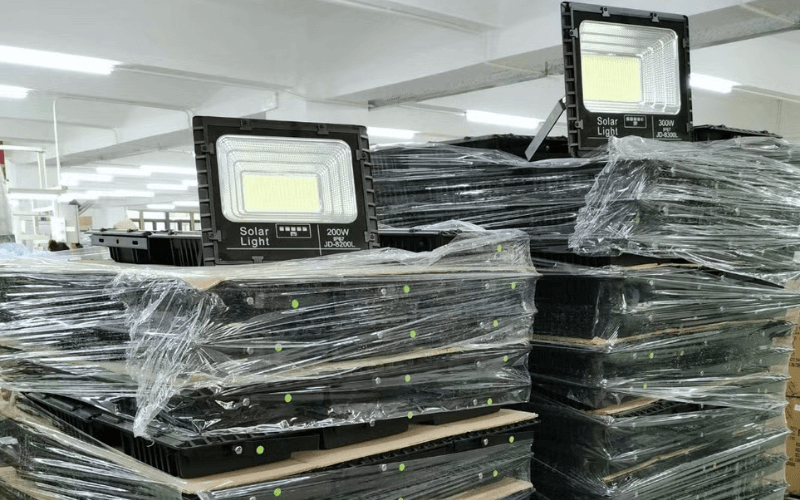
When you compare solar flood lights with traditional wired systems, the math tells a very different story than you might expect. Here’s a clearer view of the long-term picture.
| Cost Category | Solar Flood Light | Traditional Wired Flood Light |
| Unit Cost | $60–150 depending on specs and volume | $30–80 for similar lumen output |
| Installation | $0–$50 (mount bracket or pole only) | $150–$300+ (wiring, trenching, permits) |
| Cabling & Conduit | Not required (off-grid) | Required (cables, junction boxes, electrical work) |
| Electricity (5 years) | $0 (fully solar powered) | $200–$400+ per unit depending on usage |
| Maintenance | Minimal (panel cleaning, battery after 5–7 yrs) | Moderate (bulb change, cable faults, junction boxes) |
| Remote Site Suitability | Excellent — no infrastructure needed | Poor — grid access or generator required |
| Backup During Outage | Yes — works even during power failures | No — system shuts down during blackout |
| Lifespan (LED) | 50,000–100,000 hours | 20,000–30,000 hours (for standard bulbs) |
What this table makes clear is that solar flood lights may start with a slightly higher upfront investment, but they typically pay themselves off in just 1 to 2 years. Especially in places where trenching, permits, or power infrastructure are costly, the long-term savings can be substantial.
In other words, while the upfront cost may be higher, the payback period is short—and the long-term benefits are hard to ignore. And it gets even better if rebates or incentives are available in your region.
Can You Get Rebates or Incentives?
Yes, in many regions. Depending on your location and type of project, you may be eligible for solar energy rebates, green building credits, or subsidies for off-grid infrastructure. These incentives can improve ROI and even help you qualify for sustainability certifications like LEED or BREEAM.
Once you’ve confirmed that the economics work in your favor, the final—and most important—step is to choose the right supplier.
How to Choose Right Supplier: Buyer’s Checklist
Finding the right vendor isn’t just about the product—it’s about reliability, certifications, and post-sale support. Here’s a checklist with detailed questions you can use internally or during vendor interviews.
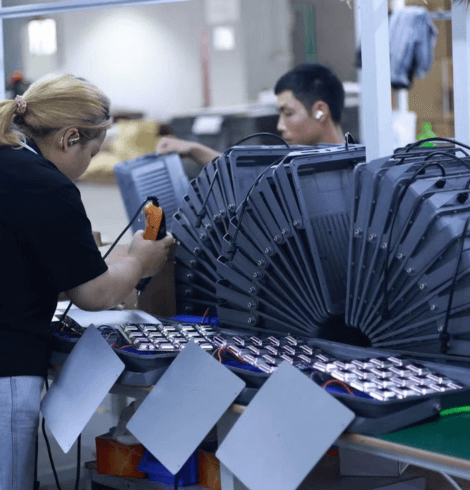
1. Product Quality & Specs
- What type of solar panel is used?
Monocrystalline is more efficient than polycrystalline, especially in low-light environments. - What type of battery is included?
LiFePO₄ is preferred for longer lifespan, higher safety, and better deep-cycle performance than standard lithium-ion. - What is the lumen output range?
Commercial-grade lights should offer at least 3,000–10,000+ lumens depending on use. - Is there a motion sensor, dimming, or smart control system?
Look for programmable features and EMS (Energy Management System) for efficiency.
2. Warranty and Lifespan Expectations
- LED Fixture Warranty: 3 to 5 years minimum
- Battery Warranty: 2 to 3 years (with lifecycle support)
- Solar Panel Warranty: Typically 10–15 years (with ≥80% output guarantee)
- Does the warranty cover the full system or just the housing?
Avoid vague warranties. Ask for written terms.
3. Certifications and Compliance
Make sure the supplier provides region-specific documentation:
| Certification | Purpose |
| CE / RoHS | Environmental and safety compliance (EU) |
| FCC / UL | US-based safety and radio-frequency compliance |
| IP65 / IP66 | Waterproof and dustproof ratings for outdoor use |
| ISO 9001 | Quality management system during manufacturing |
| CB / TUV / SAA (Optional) | Compliance for Latin America, Asia-Pacific |
Tip: Always request PDFs of certificates—not just claims in a brochure.
4. Logistics & Fulfillment
- Do they offer free samples for testing?
Trusted vendors typically offer 1–2 sample units before bulk orders. - What’s their average lead time for full container orders?
Standard is 15–30 days. Make sure they can scale quickly. - Do they offer OEM or custom branding?
If you’re a distributor or brand owner, white labeling matters. - Are technical datasheets and installation manuals provided?
Especially important if you’re doing local bidding or public tenders.
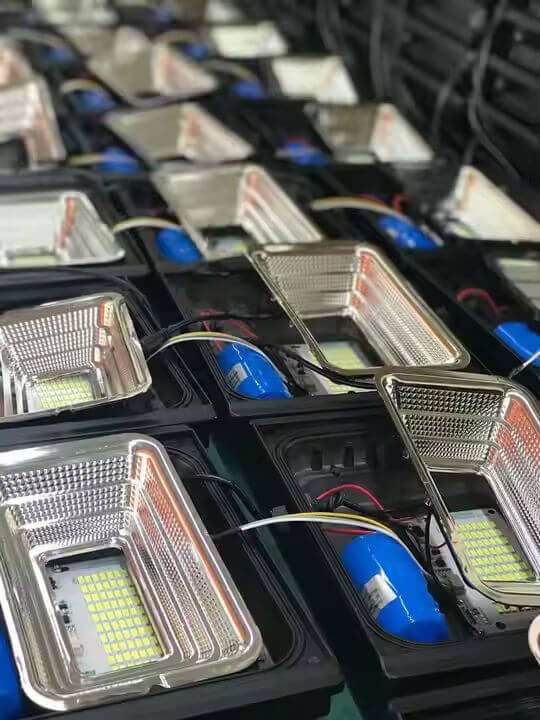
5. Experience and Track Record
- Do they have case studies or client success stories?
Look for industry match—municipal projects, industrial yards, etc. - Can they provide references from previous clients?
One or two testimonials or real photos can build strong trust. - Do they offer multi-language support (EN/ES/PT)?
This is key for LATAM buyers or if you’re distributing globally.
Using a checklist like this helps you avoid common pitfalls and ensures you’re sourcing from a partner who meets technical, logistical, and quality standards. But if you’re still on the fence, let’s wrap up with a quick recap.
Final Thoughts
Solar flood lights are no longer niche. They’re a strategic upgrade. They simplify installation, eliminate power bills, and continue working even when the grid doesn’t. Whether you’re sourcing for a warehouse, city walkway, billboard, or remote event site, these lights deliver reliable performance and long-term savings.
In short, they give you more than just lighting—they give you flexibility, control, and peace of mind.
Quick FAQ
Still have doubts? Here are some quick answers to the most common questions buyers ask.
Are solar flood lights really bright enough for commercial use?
Yes. Many models produce between 3,000 and 10,000 lumens, which matches or even exceeds the output of traditional 100W to 500W wired floodlights. You can also choose beam angles and heights depending on the area you want to cover.
How long will the system last before I need to replace anything?
The LED chips typically last over 10 years of regular use. Batteries need replacement every 5 to 7 years, depending on climate and usage. Solar panels often retain high performance for 20 to 25 years, with only minor degradation in output over time.
What happens if there’s no sun for several days?

Most quality systems are designed with oversized batteries that store 2 to 3 days of energy. Even in poor weather, your lights will continue operating at reduced brightness or in motion-sensor mode. Some models also offer AC charging as a hybrid backup.
Can I expand the system gradually over time?
Yes. Each unit operates independently, so you can start with just a few lights and scale up as needed. There’s no master control box or centralized wiring—just add more units where needed.
How do I know if a vendor is reliable?
Look for manufacturers who offer product samples, detailed documentation, and have real-world experience in your industry. They should have proper certifications and be transparent about warranty coverage. Ask to see similar projects they’ve done, especially if you’re ordering in volume.